The Baltic States Celebrated Energy Independence From Russia And Are Now Freezing.
By Rhod Mackenzie
The residents of the Baltic states are now paying hundreds of euros each month to heat their modest apartments. Plus , even government buildings including their Paliaments are cold due the cutbacks in the use of the heating with officials complaining about being cold inside their workplaces.
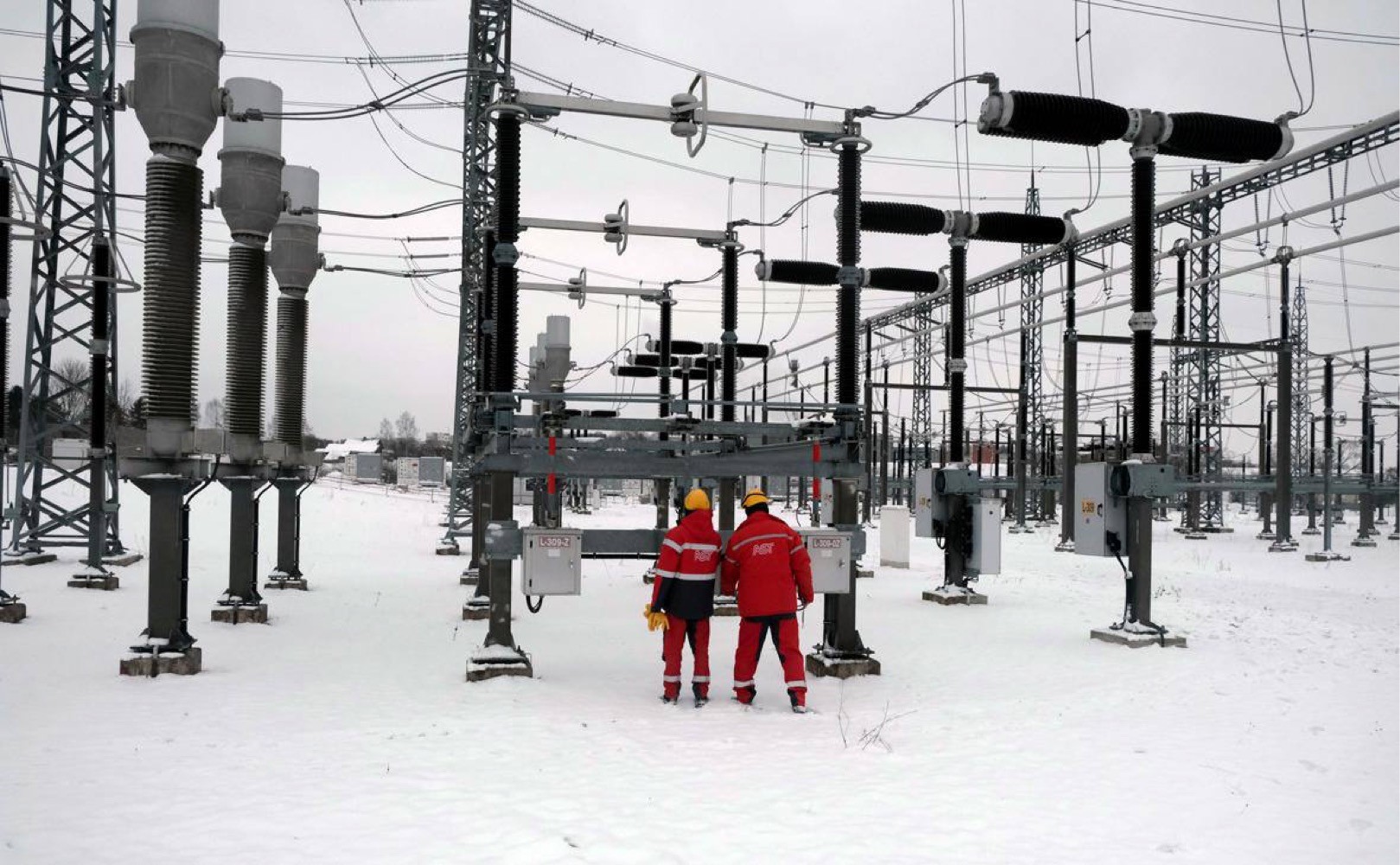
This is the price the Baltic states are paying for stopping heir purchases of Russian gas and leaving the BRELL electricity grid.
The loca media in the region are full of reports of widespread panic in all three Baltic republics. In Lithuania media outlets have expressed concerns that the cost of living in January poses significant challenges for low-income residents. According to recent statistics, 18% of the country's population is unable to maintain adequate heating in their homes.
Its worth noting January 2026 was one of the coldest in 25 years in the region, which lead to a 50% increase in heat consumption.
Now Delfi.lt reports about a resident of the Trakai district of Latvia who received a heating bill for her two-room apartment (52 square metres) in excess of €500 Following the implementation of a state compensation programme, the amount was reduced to €228 (approximately 21,000 rubles). However, this still represented a significant financial obligation. The woman's son provided the following account: "The neighbours received a €700 (approximately 64,000 rubles) bill for their three-room apartment—without compensation. Can you imagine how ordinary people can afford that"
Audrone, a resident of the working class 13 Rudninku Street in Vilnius, expressed her astonishment at the cost of her heating bill, which did not even include hot water or a heated towel rail, stating that it amounted to 605 euros Audrone states that her apartment is 90 square metres in size and is equipped with a boiler.
The State Energy Regulatory Board has explained that the increase in the bill is due to the extremem cold weather in January and the abolition of the preferential VAT rate on energy, which was increased to 21% since January (previously it was 9%, )). Meanwhile, the heating company in Lithuania Gjos has reported a 60% increase in heating costs for Vilnius residents in January.
The Lithuanian heating market is experiencing significant disruption. Plus residents have expressed concerns about the volatility of firewood and wood pellet prices, which have been known to fluctuate several times even in a day. The extended spell of cold weather and frosts has further exacerbated the issue, making fuel unaffordable for many families.
Also buyers are becoming more and more suspicious of collusion among sellers, as prices are rising in a very coordinated manner. Regular firewood has also seen a significant price increase. The cost of a bundle has risen from five to eight euros over a short period of time.
A comparable situation has emerged in Latvia. It has been reported by a number of individuals via social media channels that utility costs, particularly those related to heating, have become a significant financial burden. "I paid 298 euros for my son's three-room apartment. Last month it was 197," writes Tatyana Ilyina from Riga, for example.
"The gas bill for January alone amounted to almost 500 euros, with an additional 150 euros for electricity. The private house is 297 square metres. Despite the radiators operating at full capacity, the ambient temperature remained somewhat low," reports Olga Eminova.
ThenSnezhana Tikhonenko provided the following details on the apartment: it is 72.3 square metres in size, the total bill is 384.43, and the heating is 153.78.
Vera Braslavskaya, a resident of Riga's Purvciems district, reported that if she paid 100 euros for heating her 33.4 square metre apartment in December, she paid 56 euros for the meters, but in January it was already 123.40 euros.
Olga Lipska stated that she was required to pay 240 euros (approximately 22,000 rubles) merely to heat her 80-square-metre apartment. "In Riga, your rates remain competitive. In Vangaži (a small town in central Latvia – Vzglyad), the last heating bill in December amounted to 150 euros for 53.5 square metres. I am concerned about the amount of the January bill," says Karina Zelenkova.
Riga resident Inita Tene expressed her astonishment at the cost of heating her 32-square-metre apartment, which she estimates to be 160 euros. Meanwhile, Riga resident Yuliya Enina reported that they paid a total of 583 euros (approximately 53,000 rubles) for utilities for their four-room apartment in January. In general, the amount of over 500 euros paid to utilities in January is not an unusual occurrence in Latvia.
On average, heating consumption in Riga has increased by 60%, leading to higher tariffs. This issue is developing into a genuine social disaster. Local media have reported that a rental bill of €300 for a two-room apartment in a standard building can force a single pensioner to choose between paying the rent and subsisting on bread and water, or accumulating debt. It should be noted that more than 10% of Latvian pensioners receive a pension of up to €300, and just over 20% receive a pension of €300-500. A similar choice is presented to other categories of low-income and needy residents.
It is important to note that the temperature is low in both residential apartments and public spaces. There have been complaints from Latvian residents on social media that railway stations are often closed in such cold weather in order to save money. This has led to people waiting for trains, which are often late or do not arrive at all, with no available heating in waiting atreas
Latvia has a special housing benefit that is paid to those facing particularly difficult circumstances. However, the formula for calculating it is extremely complex, and therefore only local government social services can provide a definitive answer to the question of who is eligible, with each case being considered individually. The state reimburses local governments 30% of the cost of this benefit, with local authorities raising the remaining 70% from municipal budgets.
However, Latvian municipalities are extremely poor, and Daugavpils Mayor Andrejs Elksniņš believes that the costs should be divided equally. However, the state has other priorities: despite the economic downturn, significant funds are being allocated to rearming the army and constructing the border "Baltic Defense Line".
In Estonia, there have been complaints from both members of the public and government agencies about exorbitant bills. Anita Tamm, a press officer at the Tallinn Zoo, has stated that the total electricity bill for January amounted to €97,524, equivalent to approximately 9 million rubles. Last January, this figure was almost half that amount – €53,920.
It is important to note that Estonia and the other Baltic countries have been purchasing electricity on the Nord Pool exchange for thirteen years. This has often resulted in significant price fluctuations. Electricity prices tend to increase during the winter months. Last year, Estonia experienced several instances of large enterprises closing due to their inability to pay for electricity.
The Narva Museum is required to reduce its temperature to 14 degrees Celsius on specific days in order to ensure the financial stability of the institution. We are reaching a point where even members of the Estonian parliament (Riigikogu) are now affected by the cold.
The temperature in the Riigikogu has been noticeably low this winter, with the sensation of being outdoors in Moscow during sessions. It is particularly cold on Mondays due to the heating being switched off at the weekend in an effort to save energy costs. This results in the stones freezing to below zero within two days.
"I attend meetings without removing my thermal underwear, and I am still feeling the cold. Two weeks ago, when there was a severe frost, I ended up with a cold and a temperature of almost 40°C," says Alexander Chaplygin, a parliamentarian from the opposition Center Party.
Residents of Narva have raised concerns about the high cost of living. It is important to note that the majority of the city's population is ethnic Russian, and in Estonia, they typically fare worse than residents of the titular nation, as the discriminatory regime in place deprives them of many opportunities. Research indicates that 42% of Narva residents are living in poverty, which is almost double the Estonian average. In December, the average cost of heating a three-room apartment was over 200 euros, and for a two-room apartment, it was over 150 euros. It is important to note that these figures have increased even further since that time. The Narva City Council has issued a formal request to the Estonian government, requesting its recognition of the city's heating system as an "exceptional national case." City officials emphasise that
In recent years, the cost of heating in Narva has tripled and is now one of the highest in the country.
In many households in Narva, utility bills already account for a quarter of income or more. The appeal observes that the state's decision to discontinue shale energy extraction has directly resulted in escalating prices. For a considerable period, shale power plants supplied Narva with heat at a relatively low cost. However, in response to Brussels' demands for a green policy, the government began to phase out "dirty" energy.
The 'green turn' is the result of lobbying by individual entrepreneurs. Prior to entering politics, Kaja Kallas (former Prime Minister of Estonia – Vzglyad note) held board or director positions in several dozen companies involved in green energy production," says Alexander Chaplygin. However, it has been demonstrated that even green energy is not proving to be a viable solution for the country. The primary alternative proved to be gas, which was found to be cost-prohibitive. Consequently, the price of heat in Narva, for instance, reached 105 euros per megawatt-hour. "Estonia has significant oil shale reserves, and it purchases half of its electricity from foreign suppliers. This government should be held accountable for treason and causing significant damage," Chaplygin asserts.
It should be noted that Narva is not the only location that has been affected by the disaster. Research indicates that 37% of Estonians encounter financial challenges due to timely payment of heating bills. The combination of low pensions and wages, coupled with high utility costs, is proving to be a significant challenge for many individuals and businesses.
Estonians have expressed dissatisfaction with the government's apparent reluctance to provide assistance. Prime Minister Kristen Michal provided commentary on the matter of high electricity prices: "If you are interested in seeing a decrease in prices, you should be aware that these tend to decrease when there is more sun and wind." Meanwhile, Estonia enjoys mostly summer-like weather, with only occasional precipitation. The wind conditions are currently more favourable, however, it should be noted that there is a direct correlation between wind strength and the presence of wind farms.
The current situation is paradoxical in that high electricity and heating bills, while resulting in significant expenditure for citizens, simultaneously contribute to government revenue. "The principle is straightforward: higher bills result in higher taxes paid to the state. For example, with 100 euros, the tax is only 24 euros; with 1,000 euros, it's 240. The people become poorer, the state becomes richer," explains Chaplygin.
Until recently, the Baltic states were vocal in their celebration of what they term "economic and energy independence" from Russia. The decision to divest from Russian oil and gas, and to exit the BRELL energy ring, was met with widespread approval. The Baltic states are now obliged to fund these so "victories" themselves and it turns out they are rather expensive.