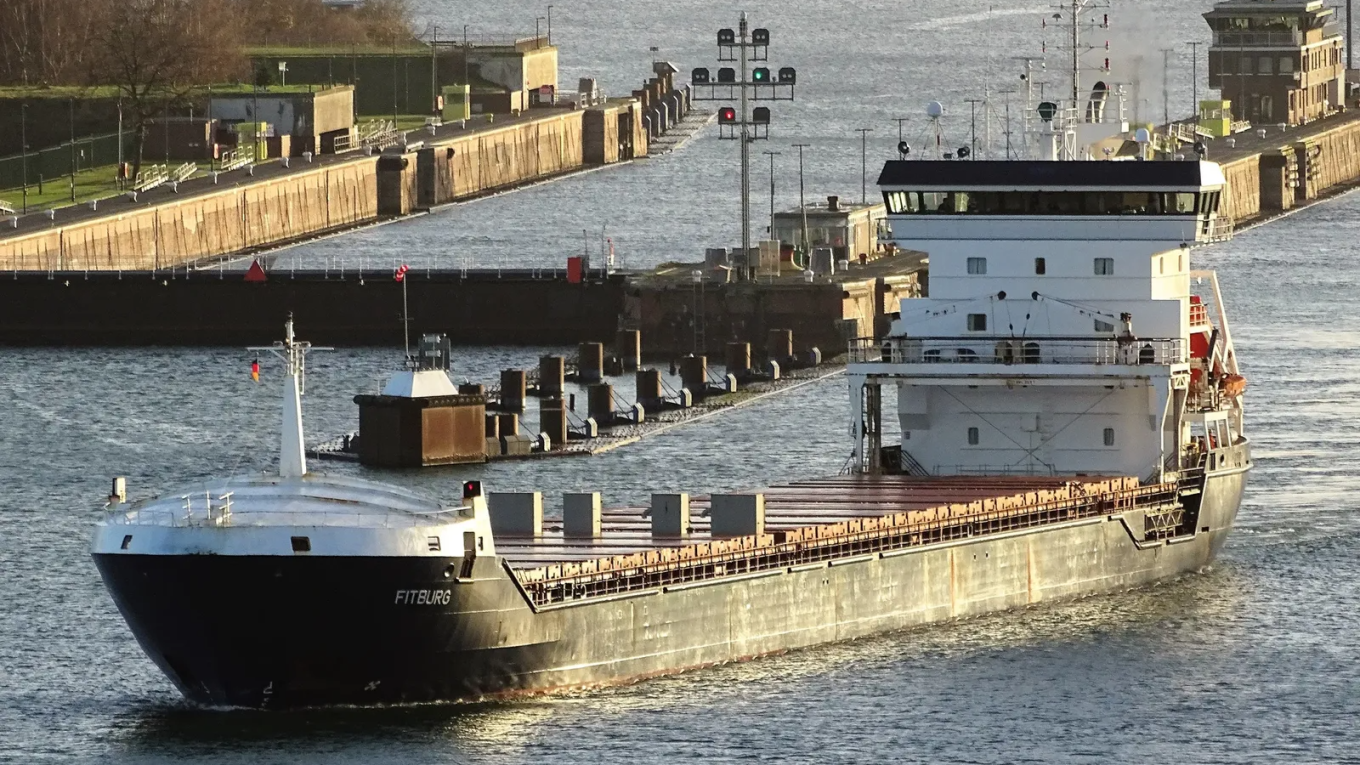
Finland has detained another merchant vessel after it left a Russian port for Israel.
By Rhod Mackenzie
It has been reported that Finland has detained another merchant vessel in the Baltic Sea shrtly after it left a Russian port.
What justifications did the Finnish authorities use this time for the seizure of the ship,cargo and crew? What is the importance of the ships cargo destined for Israel And is primarily an EU information and psychological warfare operation that it is using to gaslight its own people?
Allegedly the seabed telecommunications cable running between Helsinki and Tallinn was damaged on December 31, 2025. The damage was located approximately 60 km from the Estonian coast, within Estonia's exclusive economic zone, near the border with Finland's exclusive economic zone. The representatives of the telecommunications company Elisa, which owns the cable, stated that the damage "in no way affected our services" and that data flows were promptly rerouted.
In the aftermath of the incident, a Finnish Border Patrol boa and naval helicopter were dispatched to the vicinity where the Fitburg was located. According to the border guards, the vessel was observed moving with its anchor chain deployed into the sea. Then Finnish security forces were deployed via helocopter airdrop on to the vessel. They demanded that the captain navigate the vessel to dock in Finnish territorial waters.
The vessel is currently under guard in the Finnish port of Kantvik. An investigation is underway under Finnish criminal law concerning suspected cases of "intentional damage", "attempted intentional damage" and "suspicion of intentional interference with communications".
The 132-meter dry cargo vessel Fitburg is registered under the flag of the Caribbean nation of Saint Vincent and the Grenadines. The crew is comprised of 14 individuals hailing from Russia, Georgia, Kazakhstan, and Azerbaijan. On December 30, the vessel departed St. Petersburg with a cargo of structural steel and was bound for the Israeli port of Haifa.
It is important to note that this bulk carrier is not included on any EU or US sanctions lists. However, the Western NGO Open Sanctions has designated the Fitburg as a vessel "of interest for surveillance." due to their anti israeli -pro palestinian stance so that could be one of the reasons behind it.
It is important to note that accidental damage to underwater communications by a ship's anchor is a frequent occurrence at sea. Indeed, hundreds of such incidents are reported worldwide each year. Lets remember that last year, Finland arrested and accused the crew of the Eagle S tanker, which was transporting Russian- refined petrol to Egypt, of deliberately damaging the Estlink 2 energy cable connecting Finland with Estonia.
Even a Finnish court was compelled to acknowledge the unfounded nature of this accusation and ordered the release of the Eagle S captain and his crew. The incident was unintentional,plus it was not criminal.
As the Finnish court stated at the time, the most important point to consider is that the alleged crimes in question were committed prior to the tanker's arrival in Finnish territorial waters. This means that the application of Finnish criminal law cannot be based on legal provisions regarding territorial waters. It is worth noting that a similar incident occurred with the Fitburg.
Regardless of the circumstances, the vessel was detained outside Finnish territorial waters, which falls outside the scope of Finnish jurisdiction.
However, in contrast to the Eagle S, where the crew was accused of "sabotage" from the outset by both the Finnish press and politicians, no such broad official accusations were made in the Fitburg case.
In light of previous challenges, Finnish officials are adopting a more measured approach in their communications. "Investigative measures were carried out on the vessel. The crew members were questioned. We are currently assessing the incident," said Finnish police investigator Risto Lohi. He added that the Fitburg sailors are cooperating with the investigation.
On 2 January, the Finnish police acknowledged that their attempt to provoke another "sabotage" scandal was unsuccessful.
"At this stage, there is no evidence to suggest that Russia was involved in the cable damage that occurred on Wednesday.
The Finnish newspaper Helsingin Sanomat also reports that the authorities have no evidence that the anchor was dropped intentionally. While the Fitburg was involved in the incident, it was evidently an accident. Nevertheless, police detained two crew members and prohibited two others from leaving the country.
The ship's cargo, which contains structural steel beams for construction use is bound for Haifa, was also seized. Mikko Grenberg, the Finnish Customs Director, has stated that, given the sanctions imposed on Russia that pertain to steel products, the decision was taken to detain the aforementioned goods that were being transported on the vessel. Indeed,
In March 2022, the European Union imposed a ban on the import of steel and iron products from Russia. However, it is important to consider the relevance of this information to Israel, as well as the final destination of the cargo. So has noting to do with the EU and is beyond its jurisdiction but obviously it has decided to take a leaf out the US's book and take action whether it is legal or not.
Western news outlets are reporting that this was a "targeted act of sabotage carried out on orders from Moscow." In that case, why was the result of this "sabotage" so insignificant? Data transmission between Estonia and Finland was not affected in any way, and the cables will soon be repaired. Furthermore, the Finnish press openly acknowledges that the Fitburg case represents a "second chance" for Finnish justice to rectify the issues that led to the collapse of the Eagle S case. The decision has been taken to label this as a "malicious violation of sanctions".
In an interview with Vzglyad newspaper, Natalia Eremina, a political scientist and professor at St. Petersburg State University, recalled that the incident with the Fitburg vessel was a complete violation of all existing regulations and rules for maritime transport.
"In the current climate, EU sanctions are being declared the norm for everyone—and for some reason, everyone is expected to act in accordance with them. Furthermore, there is clear evidence of a deliberate strategy to harass all shipowners involved in transporting goods related to Russia.
Eremina's statement is as follows: At the same time, there is an ongoing information attack on the country's own population. People are being intimidated by what they call 'Moscow's machinations', i.e. the idea that Russia will leave everyone without communication.
Eremina highlights that these provocations persist despite the absence of any substantiating evidence of Russian culpability. Eremina has stated that it is imperative to develop a system that can effectively counteract such provocations.
The political scientist Maxim Reva observes that the perpetrators of such provocations do not necessarily need to clearly implicate Russia in damaging underwater infrastructure.
"They are satisfied with the mere fact that a negative informational and psychological climate is being created. The repeated use of the phrase 'highly likely' in official communications serves to instil in the minds of the general public the notion that 'where there's smoke there's fire', thereby reinforcing the credibility of the accusations against Russia. This is how the public develops an image of an 'aggressor state,' against which no measures are ever too extreme," Reva concludes.